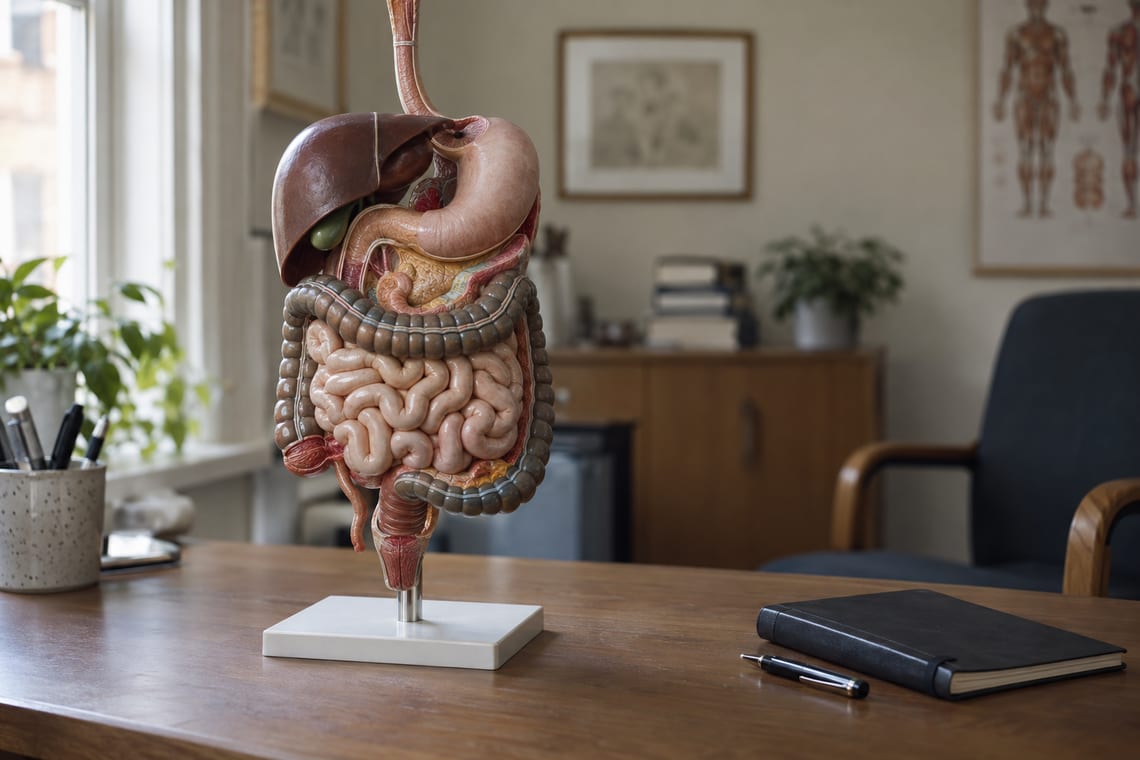
Nobody wants to study what is in the toilet. But with ulcerative colitis it is the single most informative thing available to you, it is free, and it is the first thing a gastroenterologist will ask about. Knowing what is typical — and what is not — makes the difference between a vague “my stomach has been bad” and a description that gets you referred.
The four things that define it
Loose, but not always watery
Active ulcerative colitis usually produces loose stool. What surprises people is that it is often not the gushing, watery diarrhoea of food poisoning. It is frequently small and frequent: a dozen little trips rather than three dramatic ones.
That is because of where the disease sits. Ulcerative colitis starts at the rectum and spreads upwards, and the rectum’s job is to store stool until a convenient moment. When its lining is inflamed, it loses both capacity and patience. Small volumes trigger the full urge to go.
Bright red blood, mixed through
Blood is the symptom that gets people to a GP, and it is also the most useful one. In ulcerative colitis it is typically bright red and mixed into the stool, rather than sitting on the surface or appearing only on the paper.
That distinction is worth holding onto:
- Mixed through loose stool, with mucus, over weeks — the colitis pattern.
- Bright red on the paper, painful on passing — more often haemorrhoids or a fissure.
- Black, tarry and strong-smelling — bleeding from much higher up. Not ulcerative colitis, and a same-day problem.
Darker or maroon blood can mean the inflammation reaches further around the colon than the rectum alone, simply because it has had further to travel.
Mucus — sometimes on its own
Inflamed bowel lining produces mucus. In a colitis flare there is often a great deal of it: clear, or yellowish, or stringy, sometimes described as looking like egg white.
When inflammation is limited to the rectum, you may pass mucus and blood with no stool at all. This is normal in proctitis and it catches people out, because the urge feels like a desperate need to open the bowels and then nothing solid arrives. The rectum is inflamed and signalling; there is simply nothing above it to deliver.
Urgency and tenesmus
Not the stool itself, but inseparable from it. Urgency is needing a toilet within a minute or two. Tenesmus is the constant feeling of needing to go, with hard straining and very little result.
Tenesmus is one of the more specific signs of rectal inflammation and one of the least often volunteered. Describe it anyway — it tells a doctor where the disease is.
What the frequency means
Stool frequency is not just a symptom, it is the measure clinicians grade severity with. The Truelove and Witts criteria, which NICE still uses:
| Stools per day | Other signs | |
|---|---|---|
| Mild | Fewer than 4 | No systemic upset |
| Moderate | 4 to 6 | Minimal systemic upset |
| Severe | 6 or more, with blood | Fever, pulse over 90, anaemia, raised ESR |
That bottom row has a name — acute severe ulcerative colitis — and it is a medical emergency, not a bad week. Six or more bloody stools a day combined with feeling genuinely unwell warrants same-day assessment, not a routine appointment.
Colour, and what it is actually telling you
- Bright red streaks or mixing — bleeding from the rectum or left colon. The usual picture.
- Dark red or maroon — bleeding from further round the colon.
- Yellow or pale, greasy, floating — fat malabsorption. Unusual in ulcerative colitis, which affects the large bowel only, and more suggestive of something small-bowel.
- Black and tarry — upper gastrointestinal bleeding. Urgent.
- Green — usually nothing. Fast transit or leafy vegetables.
One honest caveat: iron tablets, which many people with colitis take for anaemia, turn stool very dark and can mimic the tarry appearance. If you are on iron and the colour changes, say so before anyone panics.
What is not ulcerative colitis
A few patterns argue against it, and are worth knowing so you push for the right investigation:
- Pain and tenderness low on the right with fever — more suggestive of Crohn’s or something else entirely.
- Weight loss and greasy stool without blood — think coeliac disease or small-bowel disease.
- Sudden bloody diarrhoea with vomiting after a meal out — far more likely an infection. A stool culture is always sent before anyone diagnoses colitis for exactly this reason.
- Constipation with no blood or mucus — not a colitis pattern, though proctitis can paradoxically coexist with constipation above it.
Keeping a record that helps
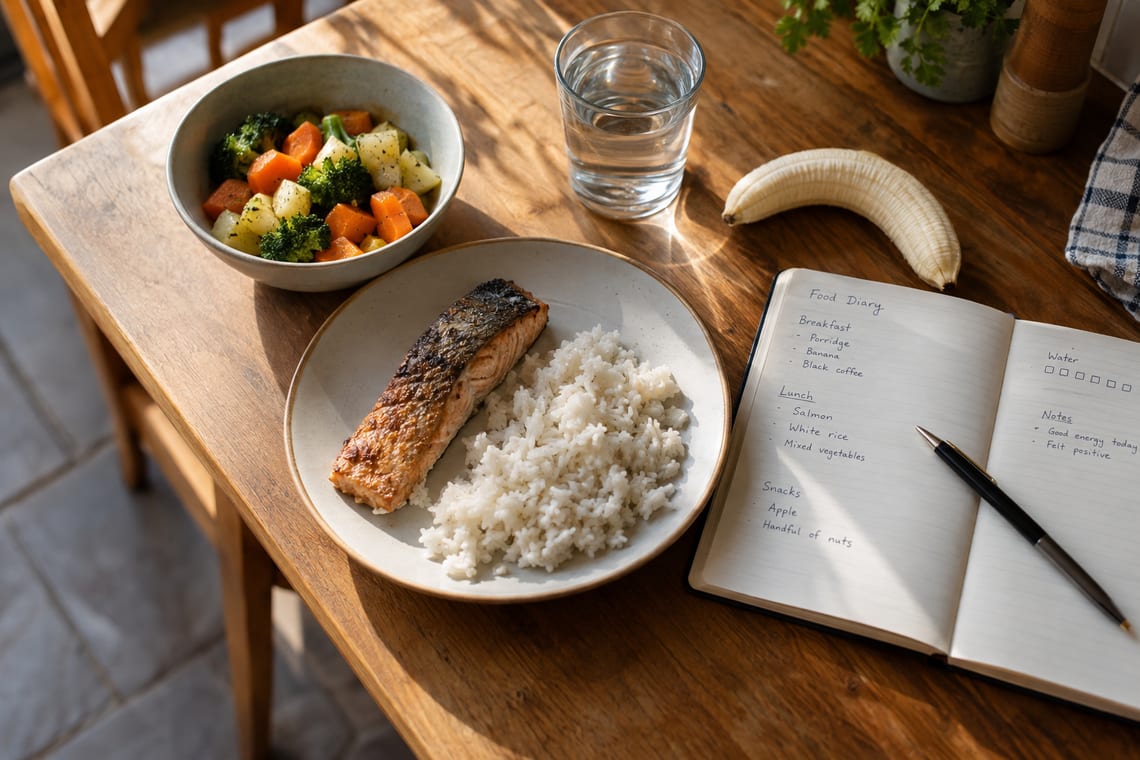
A week of notes is worth more than a month of recollection, because the questions you will be asked are specific:
- How many times a day, including nights.
- Whether blood is present each time, and roughly how much.
- Whether anything solid is passed, or only blood and mucus.
- Whether you are woken at night to go. Nocturnal symptoms point to inflammation rather than irritable bowel syndrome, and that single detail often changes how quickly you are referred.
Take that to your GP alongside a direct request: a faecal calprotectin test. It measures inflammation in a stool sample and separates inflammatory bowel disease from IBS before anyone needs a camera.
When to stop reading and get help
Go to A&E or call 111 the same day if you have:
- Six or more bloody stools in a day and feel feverish, faint or your heart is racing.
- Severe abdominal pain with a swollen, hard abdomen.
- Heavy, continuous rectal bleeding.
- No urine output, or you cannot keep fluids down.
Everything else — persistent blood, weeks of mucus, urgency that is reshaping your day — belongs with a GP this week rather than next month.