
There is no single test for ulcerative colitis. There is a sequence, and each step in it answers one question. Understanding which question each test answers is genuinely useful, because it tells you what to ask for next and stops you accepting “your bloods are normal” as the end of the conversation.
The short version
- Stool culture — is this an infection?
- Faecal calprotectin — is there real inflammation, or is this IBS?
- Blood tests — how much is this affecting you systemically?
- Colonoscopy with biopsies — what is it, and how far does it reach?
Only the last one confirms the diagnosis. The first three decide whether you get to it, and how quickly.
At the GP
The stool sample
Two things go off, often from the same sample.
A stool culture looks for infection. Campylobacter, salmonella, shigella, E. coli and C. difficile can all produce bloody diarrhoea that is indistinguishable from a first colitis flare. This is always checked before anyone diagnoses inflammatory bowel disease, and it is not a delaying tactic — treating an infection as colitis, with steroids, would be actively harmful.
Faecal calprotectin is the more interesting one. Calprotectin is a protein that white blood cells dump into the bowel when the lining is inflamed. It is measured in micrograms per gram of stool, and most laboratories treat anything under about 50 as normal.
What makes it valuable is what it rules out. Irritable bowel syndrome, which affects far more people and causes genuinely miserable symptoms, does not inflame the bowel — so calprotectin is normal. A clearly raised result means there is inflammation to find. NICE recommends the test for exactly this purpose: separating IBD from IBS in adults with no red-flag features, so that people who need a camera get one and people who do not are spared it.
If your GP has not sent it, ask for it by name.
The blood tests
Usually a full blood count, CRP or ESR, ferritin, folate, B12, and liver and kidney function.
What they can show: anaemia from blood loss, a raised inflammatory marker, a high platelet count, low iron.
What they cannot do: diagnose or exclude ulcerative colitis. Mild or limited disease — particularly proctitis, confined to the rectum — very often produces completely normal blood results. Normal bloods alongside weeks of bloody diarrhoea is not reassurance. It is a reason to ask about calprotectin.
At the hospital
Colonoscopy and biopsies
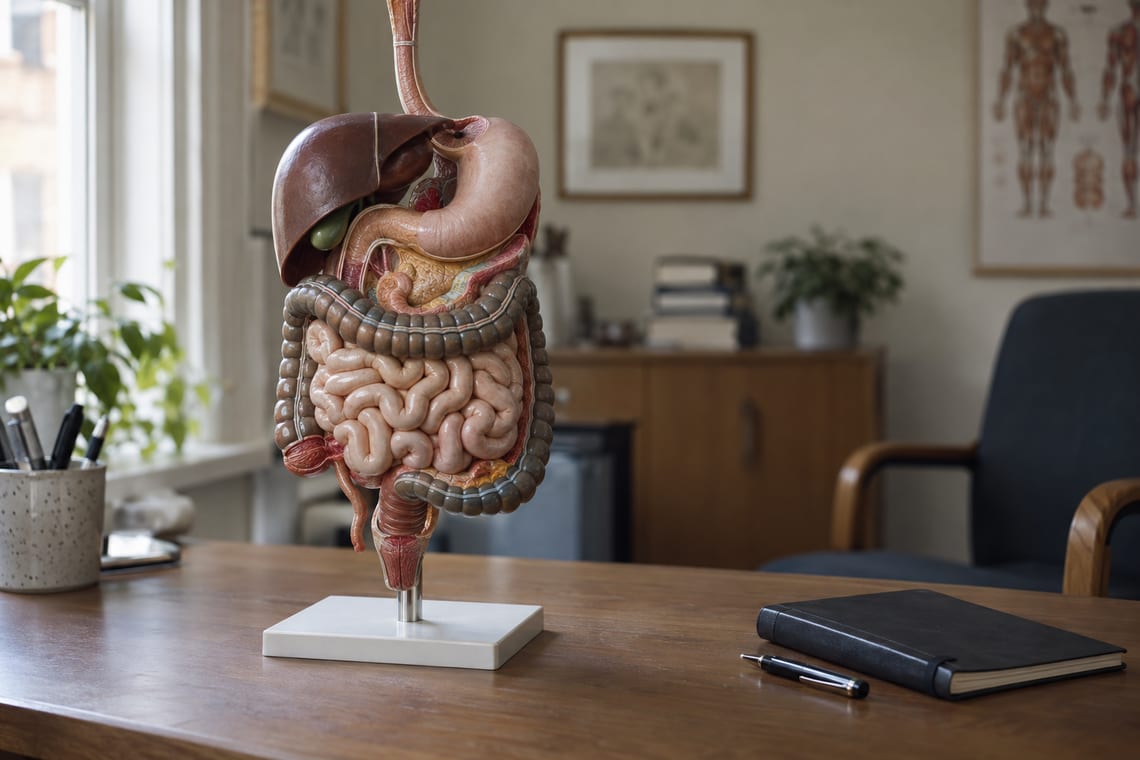
This is the test that settles it. A flexible camera is passed through the whole large bowel, and the endoscopist can see directly whether the lining is inflamed, ulcerated and bleeding.
Two features point to ulcerative colitis rather than Crohn’s:
- Continuity. Ulcerative colitis inflames an unbroken stretch starting at the rectum. Crohn’s tends to leave healthy gaps — “skip lesions” — between inflamed patches.
- Depth. Ulcerative colitis affects the innermost lining only. Crohn’s goes through the full thickness of the wall.
Small tissue samples are taken from several points, and the microscopic pattern is what confirms which disease it is. That distinction matters because the treatments diverge, and because surgery means something quite different in each.
If you are in the middle of a severe flare, you may be offered a flexible sigmoidoscopy instead — the same instrument, but only as far as the left colon. Less preparation, less risk, and since ulcerative colitis always involves the rectum, it is enough to make the diagnosis.
Scans, sometimes
An abdominal X-ray or CT is not used to diagnose the condition but may be done urgently in a severe flare, to check for complications such as a dangerously dilated colon. An MRI scan is more often used when the question is whether this is actually Crohn’s disease.
Why “how far does it reach” matters
Biopsies and the endoscopist’s findings establish the extent of the disease, and extent drives almost everything afterwards:
- Proctitis — rectum only. Often treated with suppositories or enemas alone.
- Left-sided (distal) colitis — up to the bend at the spleen.
- Extensive colitis or pancolitis — most or all of the colon.
Extent determines which medication route makes sense, how likely surgery is over a lifetime, and — importantly — whether you are enrolled in long-term bowel cancer surveillance, which NICE recommends by colonoscopy at intervals based on extent and other risk factors. That is a lifelong consequence of a single biopsy result, which is why it is worth asking your consultant to tell you plainly how far yours extends.
Getting it moving
The diagnostic route is not slow because the tests are slow. It is slow because of waits between them. A few things that genuinely help:
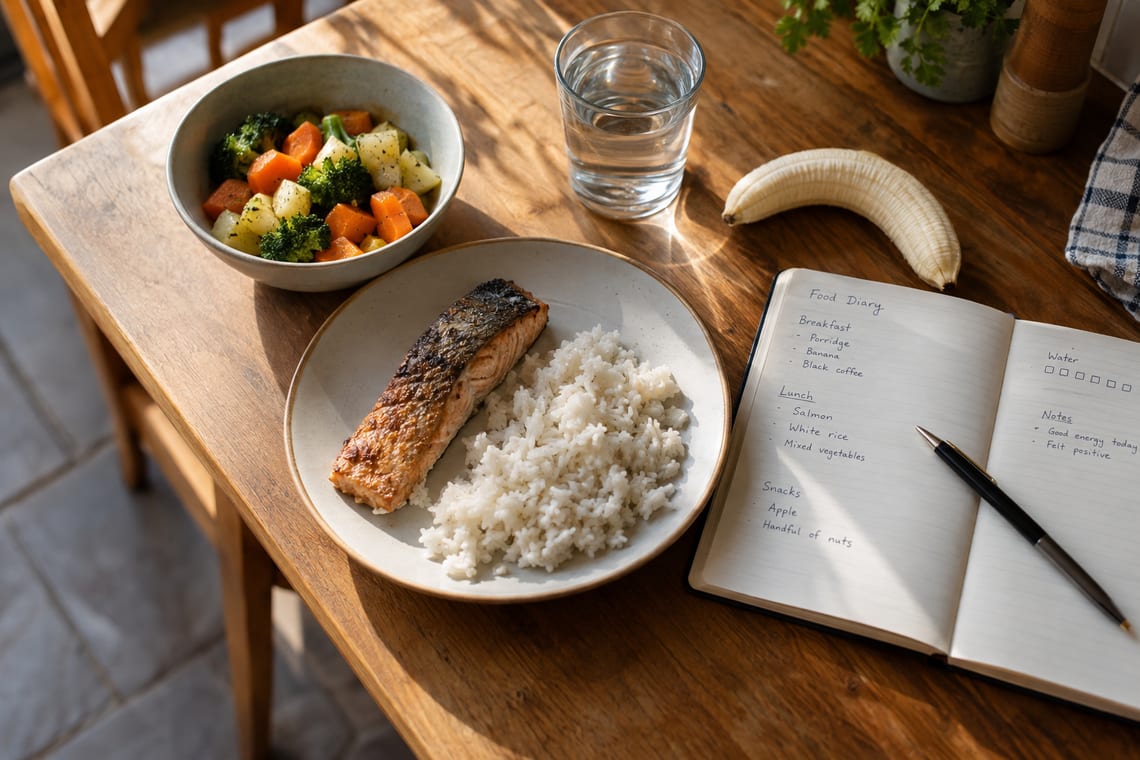
- Take a written week of symptoms: stool frequency including nights, whether blood was present, urgency, weight change.
- Mention nocturnal symptoms specifically. Being woken to open your bowels argues for inflammation rather than IBS and often changes triage.
- Ask for faecal calprotectin by name if it has not been offered.
- If you have six or more bloody stools a day and feel feverish or faint, that is not a referral conversation. That is same-day assessment.
One thing to be careful of
Starting an elimination diet, or anything else that reduces symptoms, before the stool sample and calprotectin test can muddy the results. If you are mid-way through the diagnostic process, finish the tests first. There is plenty of time to change how you eat afterwards, and a clear diagnosis is worth more than a fortnight saved.